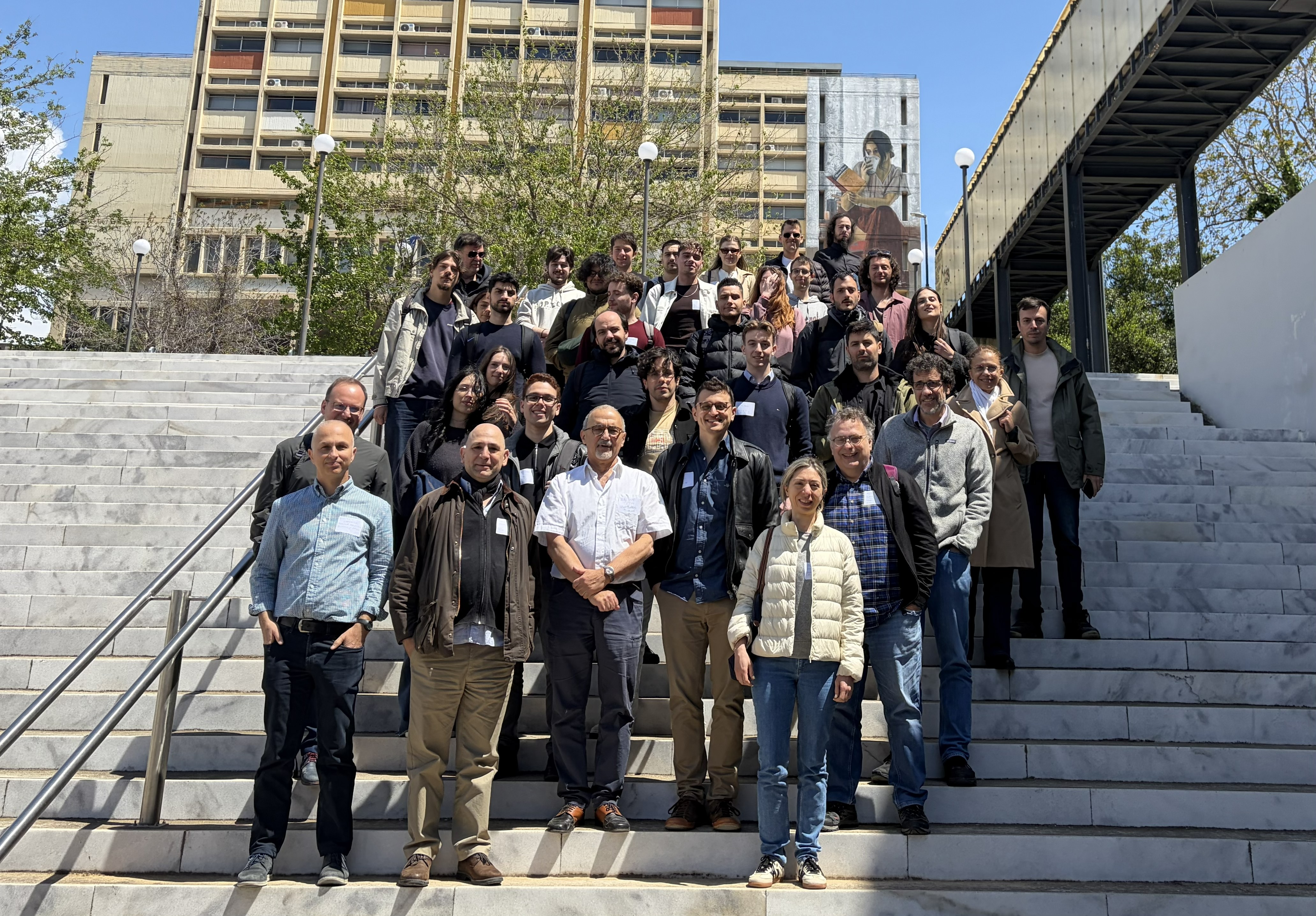
Thank you!
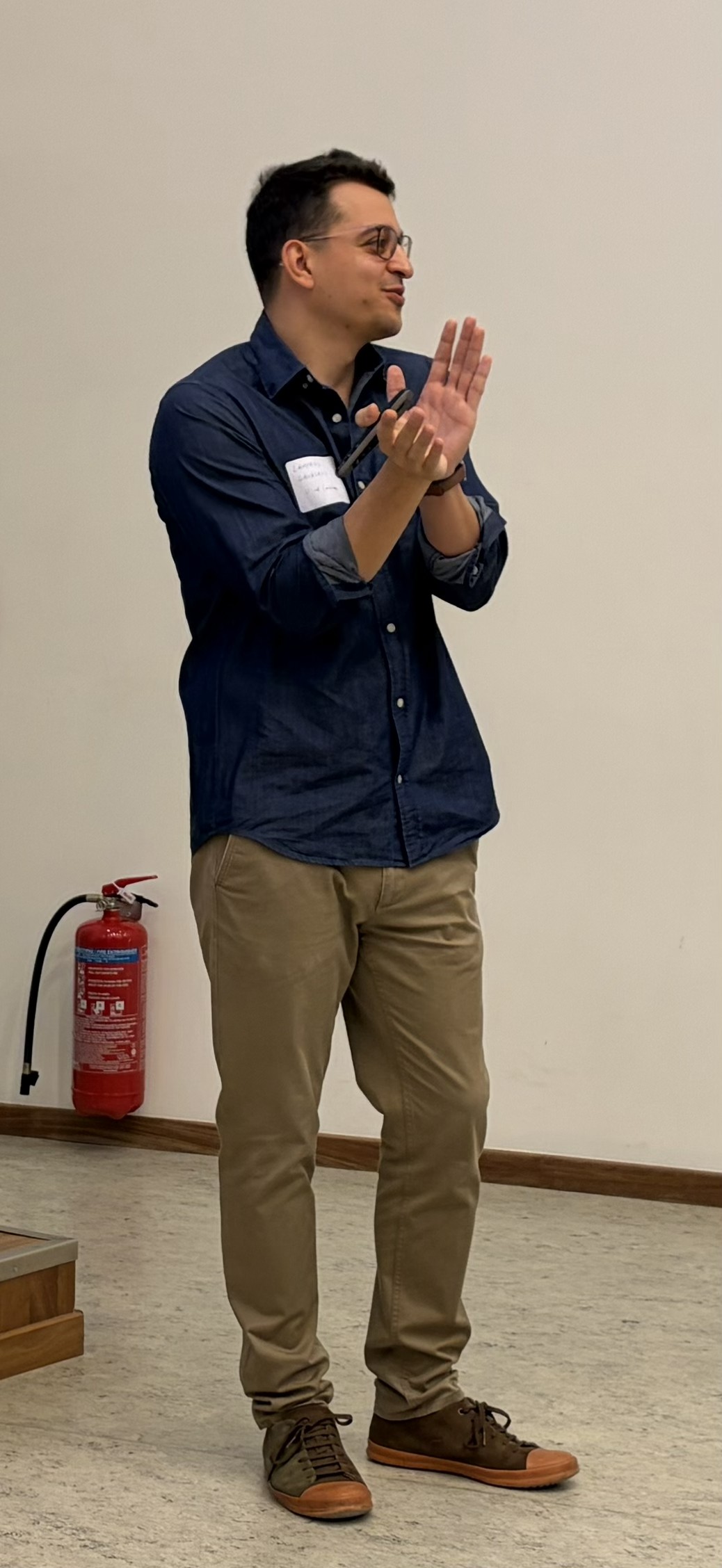
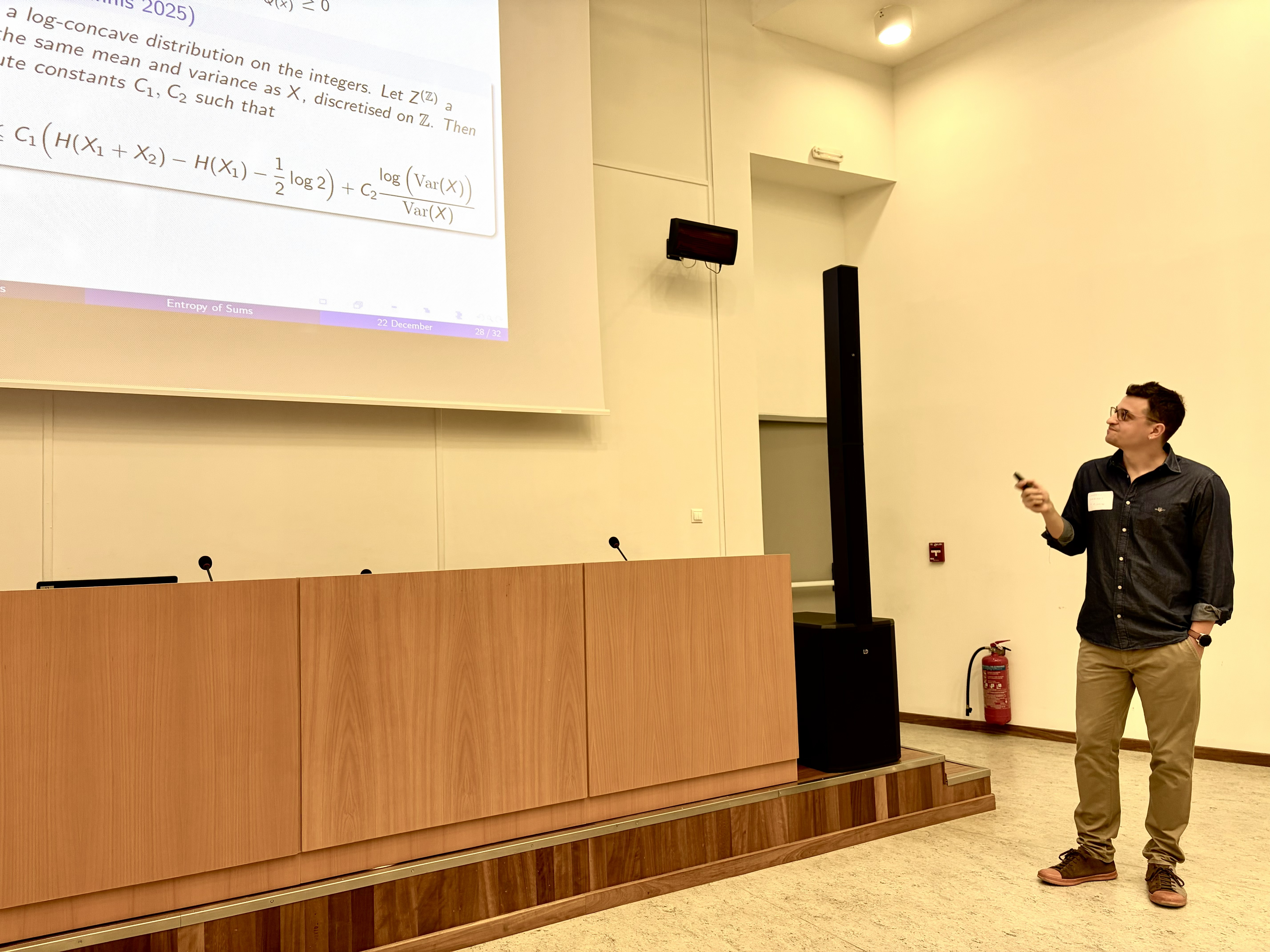
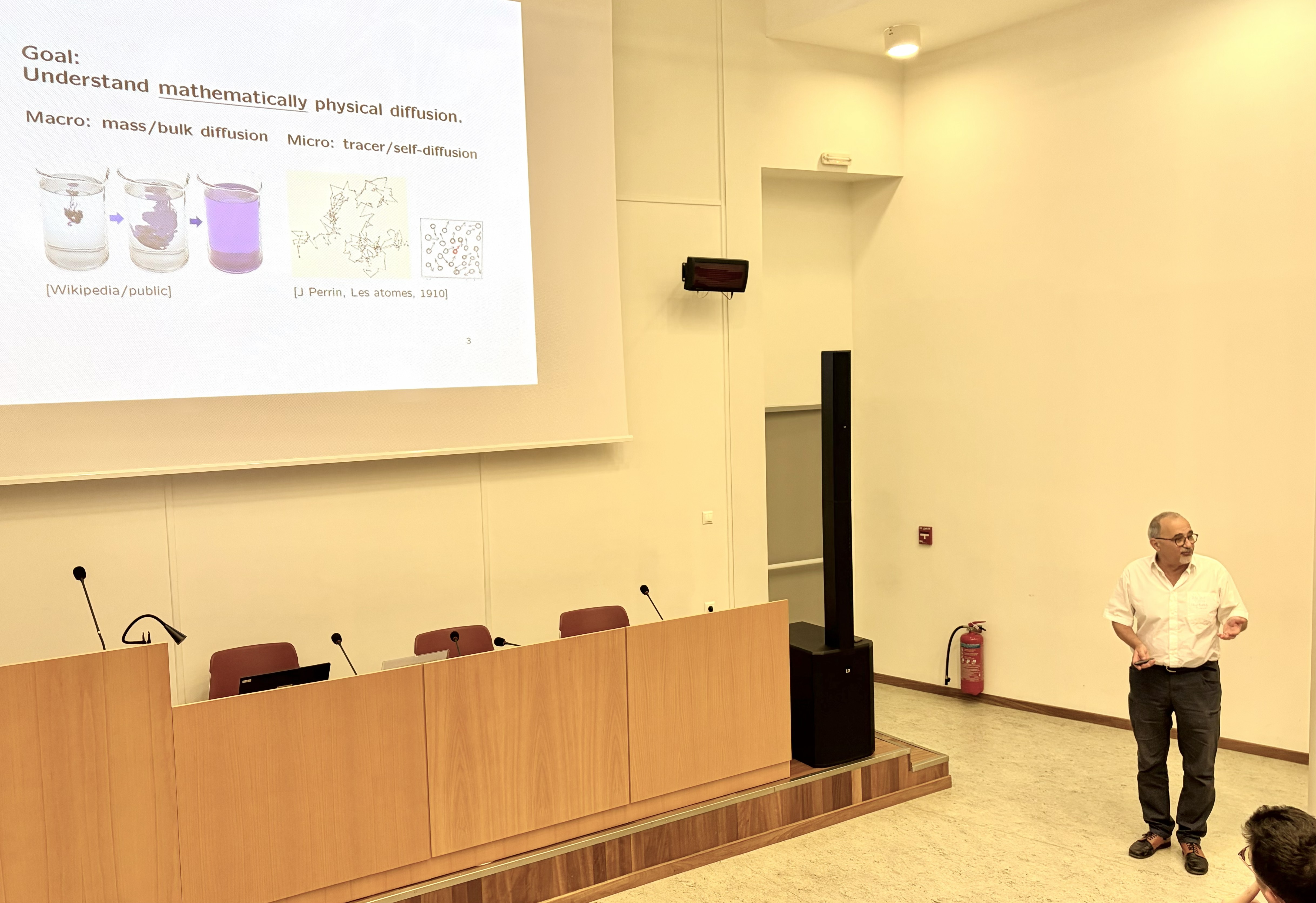
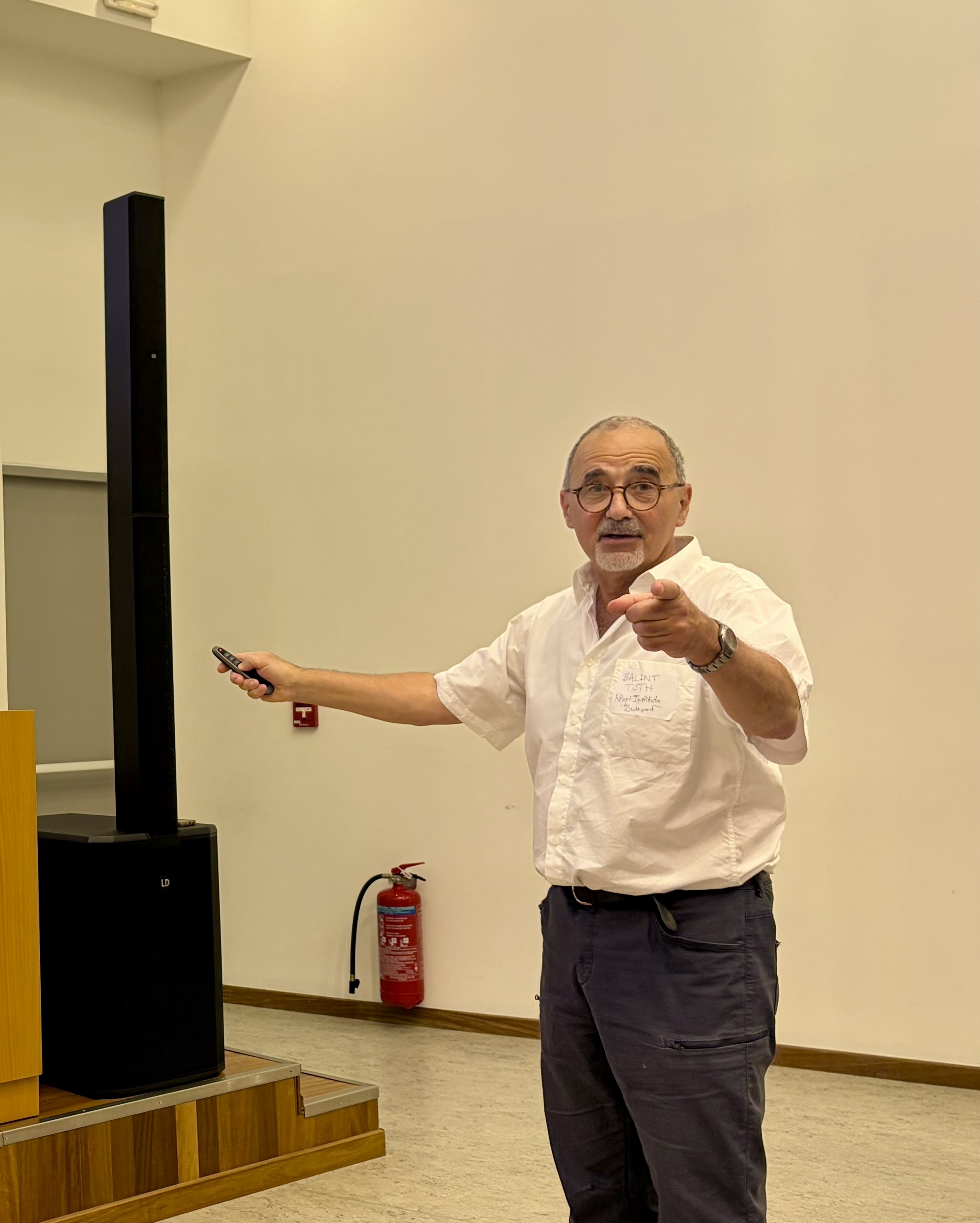
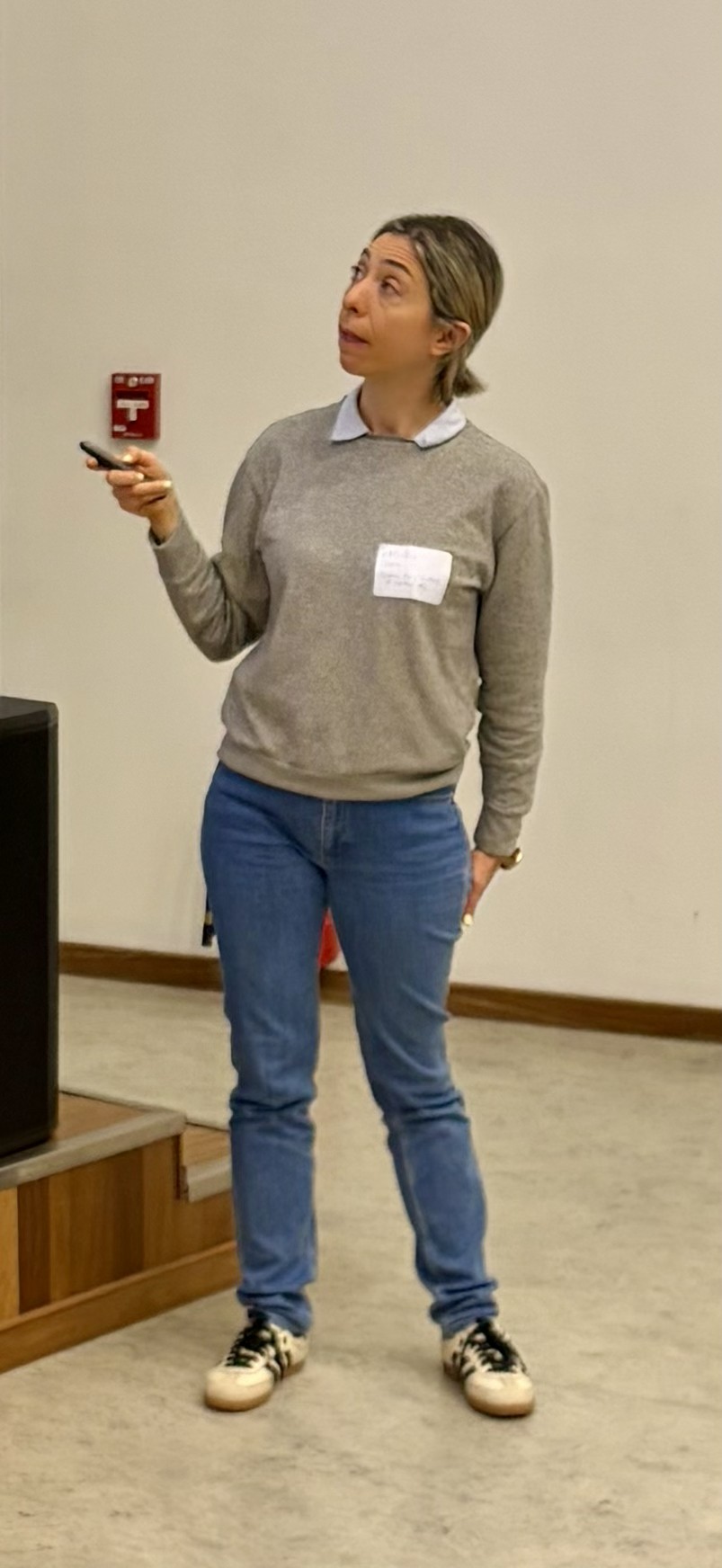
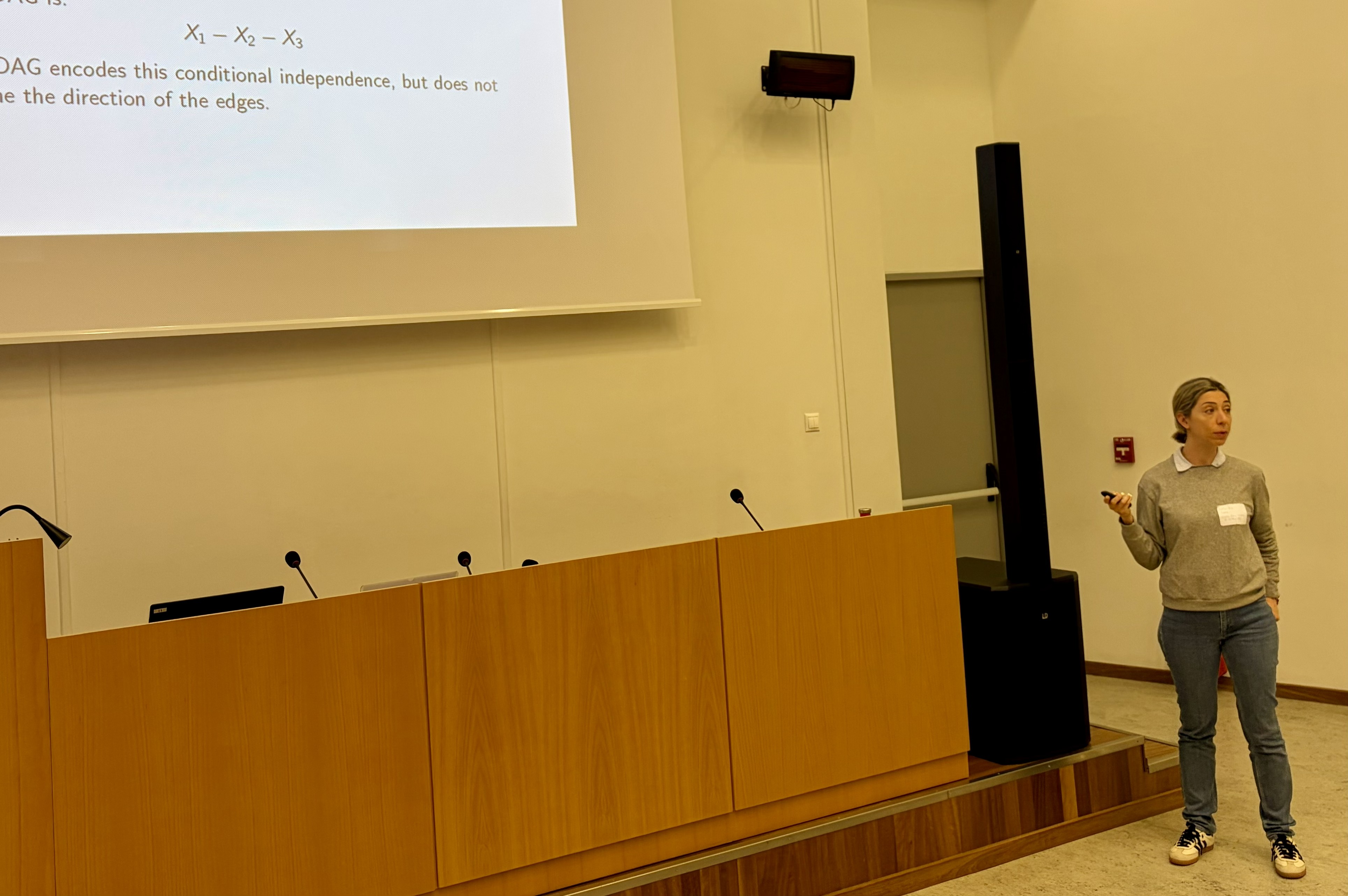
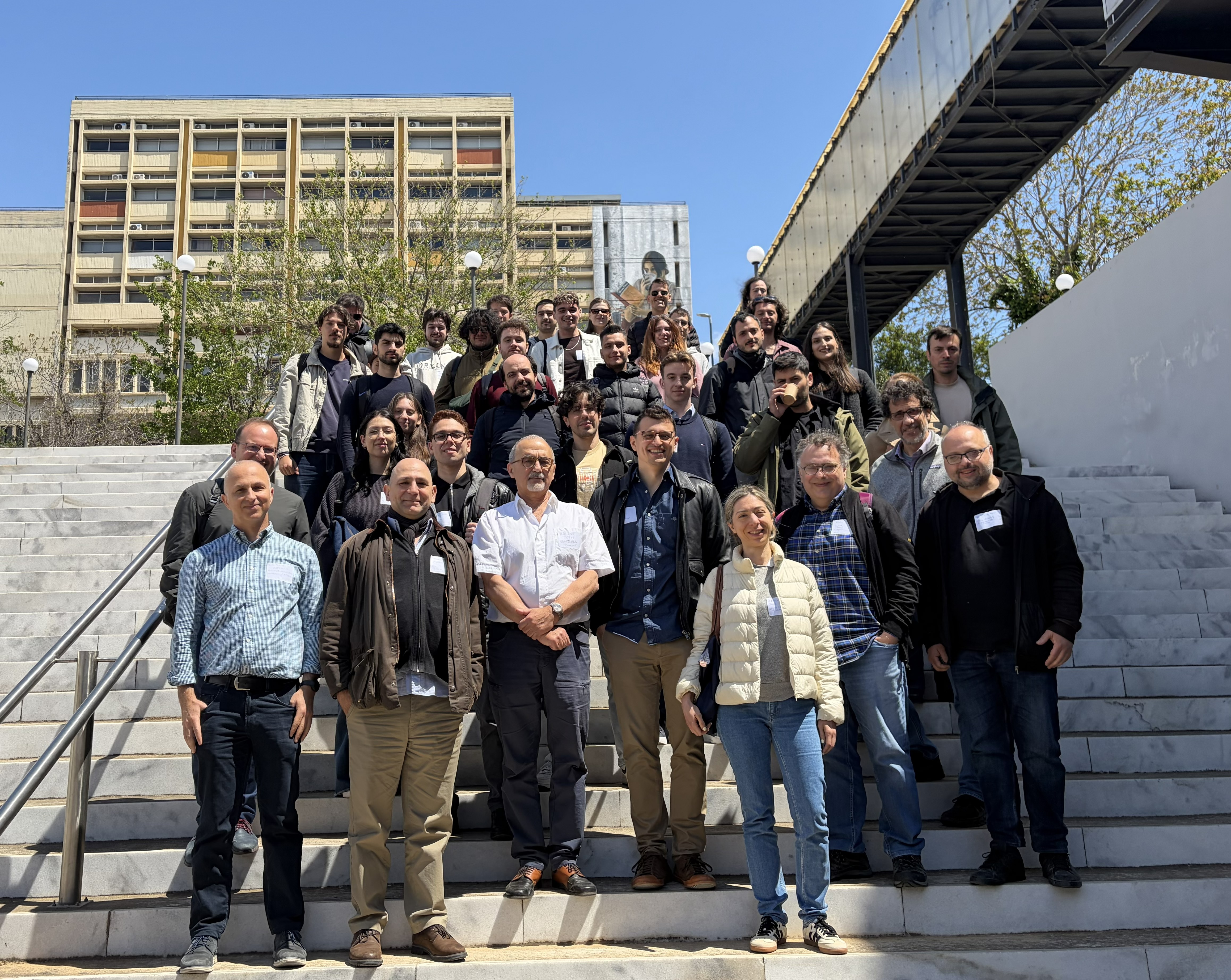
Once again, we had a wonderful colloquium! We wish to thank all the participants for making the meeting so successful, and the speakers for their great presentations. The slides from the talks and some photos can be found below.
ANNOUNCEMENT SCHEDULE SPEAKERS * RSVP *
Welcome to the 11th
Saturday May 2, 2026
School of Philosophy, University of Athens
Once again, we had a wonderful colloquium! We wish to thank all the participants for making the meeting so successful, and the speakers for their great presentations. The slides from the talks and some photos can be found below.
We are organizing the 2026 one-day Athens Probability Colloquium, centered around three invited talks in probability and its interfaces with other active areas of research. The meeting aims to bring together Athens-based researchers, post-docs, and students in probability and related areas.
All interested faculty, post-docs and students are welcome and encouraged to attend.
Previous events can be found here.
[ back to top ]
All talks will take place in Auditorium of the Library of the School of Philosophy on the University of Athens campus
Saturday, May 2, 2026
The talk is based on joint works with Matthieu Fradelizi, Ioannis Kontoyiannis and Martin Rapaport.
Solea, E., Li, B., & Kim, K. (2025). Learning causal graphs via nonlinear sufficient dimension reduction. Journal of Machine Learning Research, 26(75), 1-46.
After the last talk, there will be a final coffee break to wrap up and get another chance to chat and say goodbye.
Arrangements for coffee and
refreshments will be made locally by the organizers. Lunch will be provided at
the University Cafeteria, at a cost of € 6 per person.
[ back to top ]
Lampros Gavalakis is a Postdoctoral Research Associate of the EPSRC funded INFORMED-AI program, based at the Department of Pure Mathematics and Mathematical Statistics, at the University of Cambridge. Before that, he was a Postdoctoral Fellow of the MathInGreaterParis program, which is cofunded by the Marie Sklodowska-Curie Actions. He received his Ph.D. from the Engineering Department of the University of Cambridge, where he was working in the Signal Processing and Communications Laboratory, and his undergraduate degree in computer science from Athens University of Economics and Business. He is a recipient of the 2023 Jack Keil Wolf ISIT Student Paper Award. His research interests lie in information theory and probability theory, as well as their connections to additive combinatorics and convex analysis.
Bálint Tóth is Emeritus Professor of Probability at the University of Bristol as well as a research professor at the Alfréd Rényi Institute of Mathematics. He earned his PhD in 1988 from the Hungarian Academy of Sciences and has held senior research and professorial positions in Budapest. His work ranges from microscopic models of Brownian motion and quantum spin systems to limit theorems for random walks with long memory, non-conventional stochastic processes, and hydrodynamic limits. He has made influential contributions to the theory of self-interacting motions (reinforced, self-avoiding, and self-repellent processes) and, with Wendelin Werner, constructed the random geometric object now known as the Brownian web. Tóth has been an invited speaker at ICM 2018 and ECM 2000, and has delivered plenary and featured lectures at major meetings including SPA 2005, SPA 2014, and SPA 2022 (as an IMS Medallion Lecturer). He is a member of Academia Europaea and a corresponding member of the Hungarian Academy of Sciences, and has served in leading editorial roles, including as Editor-in-Chief of the Electronic Journal of Probability and the Annals of Applied Probability. He has served as co-Editor-in-Chief of Probability Theory and Related Fields.
Eftychia Solea is a Lecturer in Statistics in the School of Mathematical Sciences at Queen Mary University of London (QMUL). Before joining QMUL, she held lecturing positions at CREST and ENSAI (Rennes, France), and previously worked as a postdoctoral researcher at Ruhr University Bochum and the University of Cyprus. She received her PhD in Statistics from The Pennsylvania State University. She also earned an MSc in Statistics from Penn State, a Master of Advanced Study (Part III) from the University of Cambridge, and a BSc in Mathematics from the National Technical University of Athens. Her research develops statistical methodology for random functions—mathematical curves viewed as random elements in Hilbert spaces—with applications including medical imaging. She has contributed to graphical models, dimension reduction, quantile regression, and causal inference for functional data, and more recently has expanded into distributional data analysis, where observations are distributions or probability densities.
[ back to top ]
There is no registration fee and everyone interested is welcome to participate. For planning purposes, please let us know that you plan to attend by completing the RSVP form.
[ back to top ]
Dimitris Cheliotis (ΕΚΠΑ)
Ioannis Kontoyiannis (U of Cambridge)
Michalis Loulakis (ΕΜΠ)


